
An arrest for a first-time DWI in Texas is a terrifying event that can make you feel like your entire future is in jeopardy. From the moment the handcuffs click into place, you are thrust into a complex legal system that moves quickly to penalize you before you even have your day in court. Many people assume that a first offense is just a minor mistake that can be handled with a simple fine, but in Texas, it is a serious criminal matter that triggers two separate legal battles: a criminal case for your freedom and an administrative case for your driving privileges. Understanding the exact timeline of what happens next is the only way to avoid the brutal consequences of a permanent criminal record that can follow you for the rest of your life.
In Texas, law enforcement and prosecutors take an incredibly aggressive stance on intoxicated driving. Even if you have never been in trouble with the law before, the system is designed to treat you as a significant threat to public safety. From the moment you are stopped, every word you say and every action you take is being recorded and scrutinized to build a case against you. Navigating this process alone is nearly impossible, as the legal technicalities surrounding blood draws, breathalyzer maintenance, and police procedure are dense and unforgiving.
What to expect after first DWI
The hours following your arrest are a whirlwind of processing and difficult decisions. After being taken into custody, you will be booked into a local jail, where you must wait to see a judge at an arraignment to have your bail set. During this appearance, the judge will formally read your charges and may impose strict bond conditions. These conditions often include prohibiting any alcohol consumption, requiring you to stay within the county, or even mandating the installation of a deep-lung air device in your vehicle before you are even allowed to drive again.
A first-time DWI in Texas is typically classified as a Class B misdemeanor. However, the severity can be elevated based on the results of your breath or blood test. If your blood alcohol concentration (BAC) was 0.15% or higher, the charge is elevated to a Class A misdemeanor, which carries stiffer penalties including up to a year in jail. If there was a child under the age of 15 in the vehicle at the time of the stop, the charge immediately jumps to a state jail felony, which involves mandatory jail time and the permanent loss of certain civil rights, such as the right to vote or own a firearm. Regardless of the classification, the immediate impact on your reputation and the financial burden of impound fees, bail, and initial legal costs begin the moment you are released from custody.
License suspension process
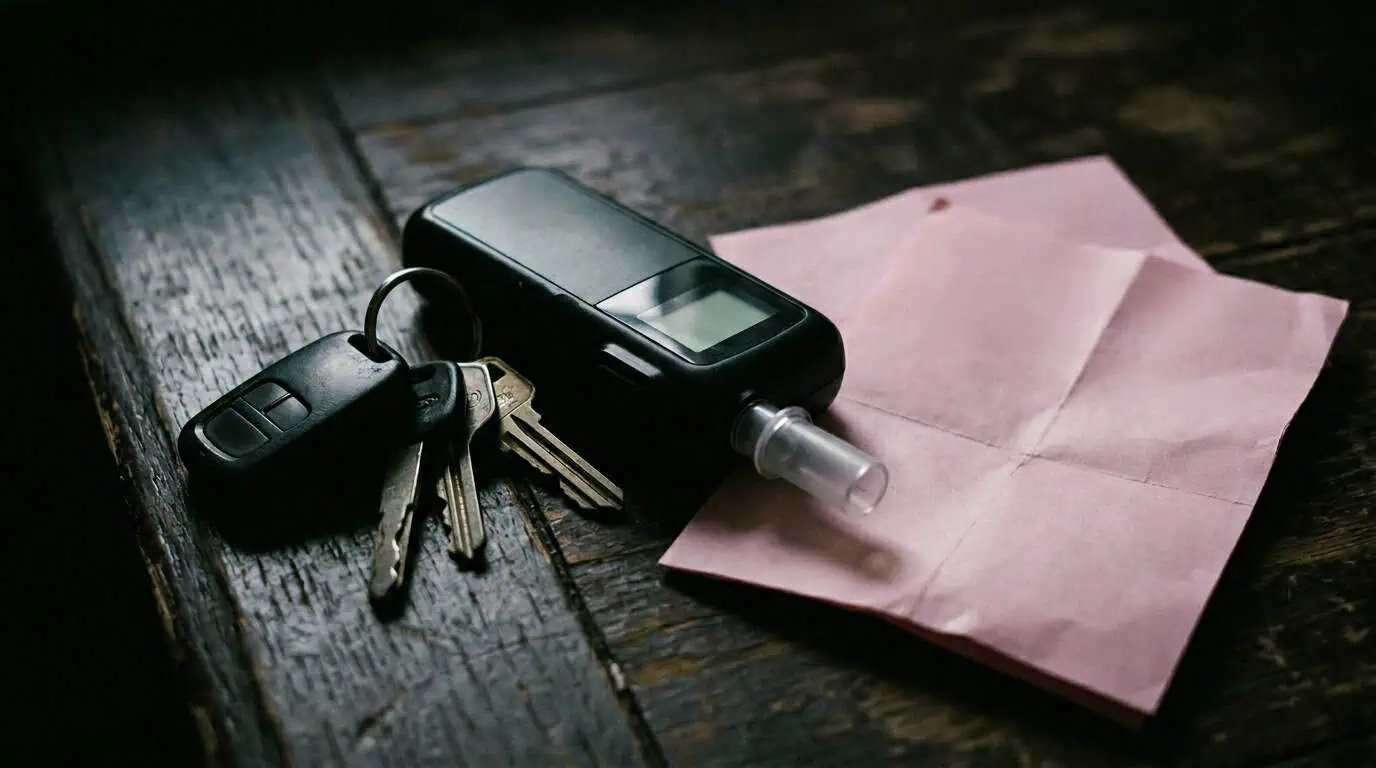
Perhaps the most immediate threat after an arrest is the loss of your driver’s license. This process does not happen through the criminal court but through an administrative process managed by the Department of Public Safety called Administrative License Revocation (ALR). When you are arrested, the officer will likely confiscate your plastic license and hand you a pink “Notice of Suspension.” This paper serves as your temporary 40-day driving permit, but it is also a ticking clock that requires immediate action.
You have a strict 15-day window from the date of your arrest to request an ALR hearing to contest this suspension. If you miss this deadline, your license will be automatically suspended on the 40th day after your arrest. For a first-offense DWI, the suspension typically lasts 90 days if you provided a sample that was over the legal limit, or 180 days if you refused to provide a sample entirely. This administrative battle is entirely separate from your criminal case. This means you could potentially win your case in criminal court but still lose your license through the ALR process if you do not request a hearing and defend it correctly. An ALR hearing is also a vital opportunity for your legal team to cross-examine the arresting officer and gather evidence that can be used later in your criminal defense.
Options for first-time offenders
Fortunately, Texas law provides several paths for first-time offenders to potentially avoid jail time and protect their long-term records. One of the most common alternatives is community supervision, commonly known as probation. Instead of serving a jail sentence, you may be released under supervision for a period of six months to two years. During this time, you must meet strict requirements such as completing community service hours, attending DWI education classes, and reporting regularly to a probation officer.
Another valuable option for eligible first-time offenders is deferred adjudication. In this scenario, you enter a plea of guilty or no contest, but the judge “defers” a finding of guilt while you complete a probationary period. If you successfully finish the program and follow all the rules, the case is eventually dismissed, and you avoid a final conviction on your record. This is a significant advantage for those worried about employment background checks or professional licensing. Successfully navigating these options often depends on demonstrating to the prosecutor that you are taking the situation seriously by voluntarily enrolling in education programs or alcohol assessments early in the process.
How to minimize long-term consequences
A DWI conviction never naturally drops off your criminal record in Texas, making early intervention and strategic planning essential to protect your career and future opportunities. One way to mitigate the immediate impact of an arrest is by applying for an occupational driver’s license (ODL). This is a special restricted license that allows you to drive to work, school, and for essential household duties during a suspension period, ensuring you don’t lose your job while your case is pending.
Furthermore, some first-time offenders may eventually qualify for an Order of Nondisclosure. This legal tool effectively seals the record of the DWI from public view, including most private employers. To qualify for this after a first offense, you must typically complete a waiting period and have an ignition interlock device (IID) installed on your vehicle for at least six months during your probation. Working with an attorney who can challenge the legality of your traffic stop, the reliability of the field sobriety tests, or the accuracy of the BAC testing equipment is the most effective way to seek a reduction of charges or a total dismissal. The goal is to ensure that one mistake on one night doesn’t define the rest of your life or prevent you from achieving your professional goals.
In many cases, the state’s evidence is not as strong as it initially seems. Police officers often make procedural errors during the arrest process, or the technical equipment used to measure blood alcohol levels may not have been properly maintained or calibrated. By thoroughly investigating every aspect of the stop and subsequent arrest, a defense team can often uncover significant flaws in the prosecution’s case. Whether it’s questioning the “reasonable suspicion” the officer had for the initial stop or challenging the scientific validity of the blood draw results, these strategies are essential for anyone facing their first intoxication charge in Texas.
Contact Buck Johnson Law Today
A first-time DWI in Texas is a high-stakes legal battle that requires immediate action to protect your freedom and your right to drive. You only have 15 days from the date of your arrest to save your license, and every day you wait is another day the prosecution uses to build their case against you. Buck Johnson Law specializes in defending first-time offenders and helping them navigate the complexities of both the criminal and ALR processes. We are dedicated to fighting for the best possible outcome, whether that means a complete dismissal, a reduction in charges, or protecting your future record through deferred adjudication. Don’t leave your future to chance. Contact our office today to schedule your consultation and take the first step toward putting this legal storm behind you.